

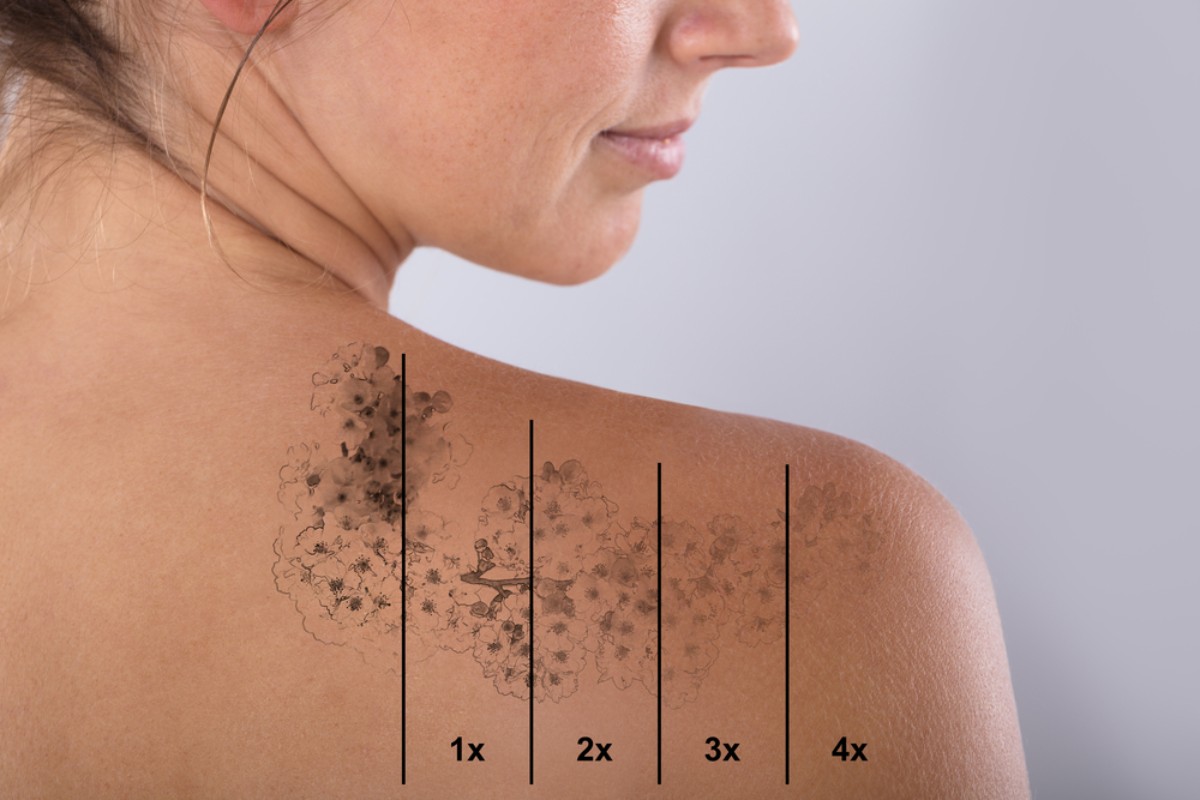
The complete tattoo removal process, from your first laser session to the point where the ink has fully cleared, takes most people between one and three years. That might sound like a long time. It is. And understanding why helps set realistic expectations before you commit to the process.
The total duration breaks down into two separate time measurements that people often confuse. There is the time each individual session takes, which is relatively short. Then there is the overall treatment timeline, which stretches across many months due to the mandatory waiting periods between appointments. Both matter, and both are worth understanding in detail.
How Long Does a Single Laser Session Take?
A single session is quick. Most appointments last between 10 and 30 minutes, depending on the size and complexity of the tattoo. A small, simple tattoo on the wrist might take five to ten minutes under the laser. A large back piece or full sleeve will take considerably longer, sometimes 45 minutes to an hour, particularly when multiple colours require different laser settings and repeated passes.
The consultation and preparation add time to your first appointment. You can expect that initial visit to run to 60 to 90 minutes in total, including skin assessment, a patch test in many cases, photographs, and a discussion about the expected number of sessions.
Why the Overall Process Takes So Long
This is where most people are surprised. The laser does not remove the ink directly. It shatters the ink particles into tiny fragments, and your body’s lymphatic system gradually flushes those fragments away over the weeks that follow each session. This biological clearance process cannot be rushed.
Clinics schedule sessions six to twelve weeks apart for this reason. Going back too soon, before the body has finished processing the previous session’s work, does not accelerate results. It puts the skin at risk of scarring, blistering, and uneven pigmentation. Eight weeks is a common minimum gap. Many practitioners recommend ten to twelve weeks between sessions, particularly for clients with darker skin tones or those treating areas of the body with slower circulation.
With six to twelve sessions needed for most tattoos, and gaps of six to twelve weeks between each one, the maths adds up quickly. Six sessions at eight-week intervals take just under a year. Twelve sessions at ten-week intervals take well over two years.
What Determines the Total Timeline?
The size and ink density of the tattoo are the most obvious factors. A small, lightly inked design clears faster than a large tattoo with heavily saturated colour packed in by a skilled professional artist.
Ink colours play a significant role. Black ink responds fastest to laser treatment. It absorbs the broadest range of laser wavelengths and typically fades more quickly than any other colour. Greens, blues, purples, reds, and oranges all require specific wavelengths and more sessions. White ink, yellow, and light pastel shades are the most resistant and can extend the overall timeline considerably.
The age of the tattoo affects how quickly it fades. Older tattoos have already experienced some natural degradation of the ink. The body has been slowly processing the pigment for years. As a result, older tattoos often respond faster in the early sessions than fresh tattoos, which can reduce the overall number of appointments needed.
Tattoo placement on the body directly influences how quickly the ink clears between sessions. Areas with strong blood flow and active lymphatic drainage, such as the upper chest, upper back, and neck, process the shattered ink particles faster. The hands, fingers, feet, lower legs, and ankles have poorer circulation and clear more slowly. A tattoo on the foot can take noticeably longer to remove than an identical tattoo on the upper arm.
Your immune system and lifestyle determine how efficiently the body clears ink between sessions. Smokers are one of the clearest examples of how lifestyle affects the timeline. Clinical studies have shown that smokers require significantly more sessions, in some cases up to 70% more, compared to non-smokers. Poor diet, low physical activity, high stress levels, and inadequate hydration all slow the lymphatic system and extend the overall removal timeline.
Skin type, measured on the Fitzpatrick scale, also influences timing. Lighter skin types allow practitioners to use higher laser energy settings, which break down ink more aggressively and can reduce the number of sessions required. Darker skin types need lower energy settings to protect against pigmentation changes, which spreads the work over more sessions and a longer overall period.
A Realistic Timeline by Tattoo Type
A small, simple, black-ink tattoo, such as a name, symbol, or small design, done by an amateur or with minimal ink, can clear in as few as four to six sessions. At eight-week intervals, that is a total timeline of around seven to ten months from start to finish.
A medium-sized professional black and grey tattoo, covering perhaps a quarter of the forearm, typically requires six to nine sessions. Budget for a total timeline of twelve to eighteen months.
A large, multicoloured professional tattoo, such as a sleeve, chest piece, or back tattoo, routinely requires ten to fifteen sessions or more. With appropriate gaps between appointments, the full removal process for these tattoos extends to two to three years, and sometimes longer.
Cover-up tattoos are among the most difficult cases. When an artist has tattooed over an existing design, the ink density doubles, and the layering of different pigments creates a complex removal challenge. These cases frequently sit at the longer end of every estimate.
Does Removal Get Faster as You Progress?
Not necessarily, though the visible fading does tend to be most dramatic in the first few sessions. The later stages of removal often involve clearing residual ink that resisted the earlier sessions, and this can feel slow. Stubborn colours, particularly reds and yellows, may plateau for a period before responding again.
Some clients switch to a picosecond laser mid-treatment if their tattoo has stopped responding to a traditional Q-switched nanosecond laser. Picosecond technology, such as the PicoSure or PicoWay, delivers energy in shorter pulses and can reactivate fading in tattoos that have become resistant to conventional treatment.
What Happens After the Final Session?
The final laser session is not the end of the timeline. After your last treatment, the skin continues to clear for three to six months as the body finishes processing the remaining ink fragments. Many clinics ask clients to return for a review appointment three months after the final session to assess whether the result meets the expected outcome or whether any additional sessions are required.
Full clearance, particularly for dense or multicoloured tattoos, is sometimes defined as 95% or more removal rather than invisible skin. In some cases, a very faint shadow or ghost image may remain. This is more common with heavily saturated professional tattoos and is worth discussing with your clinic before treatment begins.
How to Speed Up the Overall Timeline
You cannot shorten the gaps between sessions without compromising results. But you can support the clearance process between appointments. Staying well hydrated supports lymphatic function. Regular aerobic exercise improves circulation and accelerates ink clearance. Avoiding sun exposure on the treated area protects the skin and keeps it ready for the next session. Quitting smoking is probably the single most impactful lifestyle change a client can make to reduce their overall removal timeline.
Some clinics recommend lymphatic massage in the weeks following each session to support drainage in the treated area. The evidence base for this is still developing, but many practitioners report that clients who actively support their lymphatic system between sessions see faster, more consistent fading.
Choosing the Right Clinic Matters for the Timeline
The technology a clinic uses directly affects how many sessions you will need and, therefore, how long the overall process takes. Clinics using modern picosecond lasers consistently achieve results in fewer sessions than those using older nanosecond technology. This is particularly relevant for multicoloured tattoos and previously treated tattoos that have stalled.
A thorough initial assessment by a qualified practitioner, using a structured tool such as the Kirby-Desai Scale, gives the most accurate indication of your personal timeline from the outset. Clinics that skip this assessment and offer fixed session packages without properly evaluating your tattoo are not serving your best interests.
In the UK, look for practitioners with a Level 4 Certificate in Laser and Intense Pulsed Light Treatments or registered with the Joint Council for Cosmetic Practitioners (JCCP). Ask for a consultation before committing to any package, and make sure the clinic photographs your tattoo at every stage so you can track progress across the full removal period.
