

Self-tan can look so lovely until you spot dark patches, black elbows, or lines just before a big night out. The possibility is that very often the surface colour could be eased away in a day or so.
The key is to work gently. This can be a big problem if you are scrubbing aggressively, which most people do – and then Christmas Eve comes along when many weddings, parties, or other special occasions take place.
Start with a Warm Shower
Start with a hot shower that will open the pores and soften the outer skin layer. Don’t have the water so hot that it irritates your skin and can dry you out.
For 5-10 minutes, let warm water wash over the excess colour. It helps to give a really thorough scrub of any dead skin cells, allowing for the following steps to work better.
Use a Gentle Exfoliant
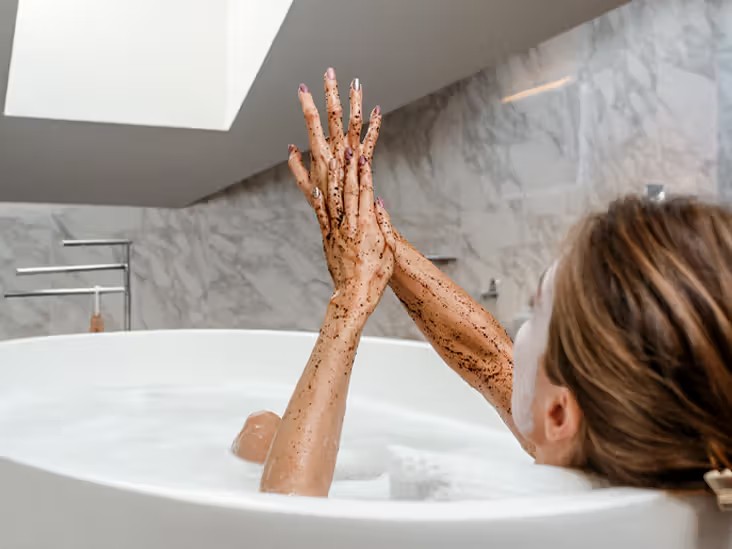
Use a gentle scrubbing body exfoliant on unevenly tanned areas. Concentrate on knees, elbows, ankle joints, as well as various other areas where self-tan usually accumulates.
Gently massage instead of scrubbing harder. Do not try to remove all at once, you might have to repeat the procedure later.
If your skin starts becoming sore or more unusually red, then you should stop exfoliating and let it rest.
Try a Tan Removal Product
Tan remover specifically will probably soften difficult-to-remove self-tan. Adhere to the recommendations of the product and let it rest for that much time.
You are to wash the hair and after that softly peel away any remaining colour. Never use multiple powerful exfoliating products simultaneously because that can further raise irritation.
Be Cautious with a Tan Remover Glove
It acts as a subtle mechanical exfoliant when paired with warm water and a tan remover glove. This could be great for areas where the colour has built up.
Moisten glove and perform gentle moving. There is no need to apply hard pressure. Let the water, the glove, and light friction do their job.
Do not use on cuts, rashes, sunburn, or broken skin.
Pay Attention to Dry Areas
Dry skin always looks darker with self-tan. Moisturise the area where you scrubbed too, especially if your elbows or knees still seem dark.
You can try a simple light body cream to nourish dry skin. Once the skin is happy, you can determine whether a light exfoliation is necessary again.
Remove Streaks Without Overdoing It
They are useful for when, even if the tan appears uneven in spots, it does not require the removal of an entire tan. Focus on the streaks and dark spots.
Moisturise after cleansing of excess colour. This can bring some balance to the skin and stop dryness from highlighting the patch.
If You Need to Reapply
If you would like to add another coat after removing the old tan, let your skin rest first. Have it cleaned, dry, and well-prepared.
Use a fake tan applicator (not one that has been used) to ensure the product is rubbed in evenly. Focus on blending around hands, feet, knees, and elbows.
Don’t rush the application just because you’ve got a function to go to that day.
Give Your Skin Time to Settle
You can remove a tan on the same day, but your skin can only handle so much exfoliation. Even trying to bare every last hint of colour is abrasive.
Work gradually. So warm water, gentle exfoliation, and moisturising are usually a better use of your time than scrubbing vigorously.
Old colour with a tan remover glove or even new layers of colour with a fake tan applicator without leaving you seeking healthy-looking skin at all.
With a little patience, your skin will appear smoother and more even before the big day.
