

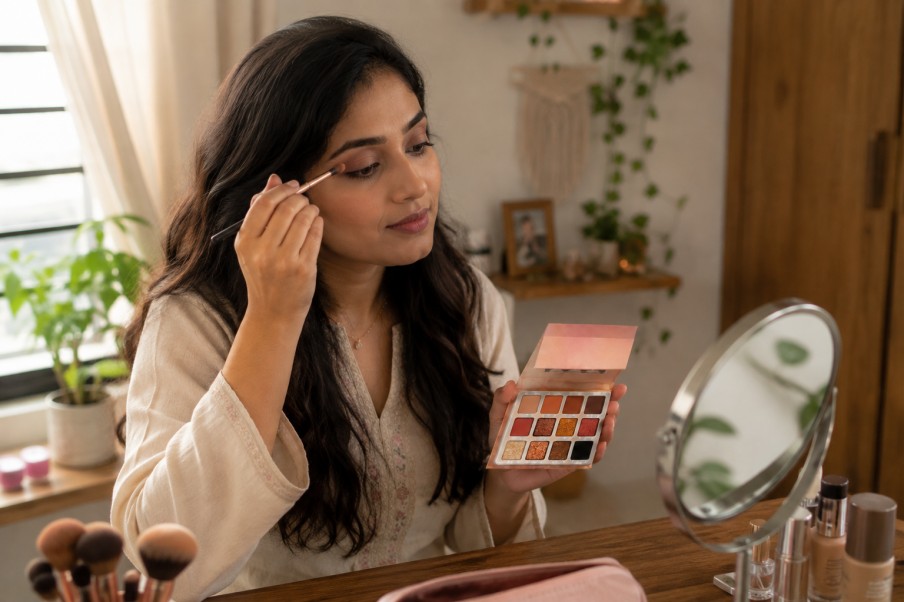
Buying an Eyeshadow Palette can be exciting, especially when you see rows of beautiful colours staring back at you. But how many of those shades will you actually use? It is easy to get tempted by bright blues, glittery greens, or dramatic purples when you really need a few versatile shades for everyday makeup. The right palette is not necessarily the one with the most colours. It is the one that fits your style, routine, and the looks you genuinely enjoy creating.
Start With Your Makeup Style
Before buying a palette, think about the kind of eye makeup you usually wear.
Do you prefer soft browns and neutral tones? Maybe you enjoy smoky eyes on weekends or like experimenting with colourful looks when you go out. Your answer can quickly narrow down the options.
For Everyday Makeup
If most of your makeup looks are simple, choose shades that are easy to mix and wear. Browns, beige, taupe, soft pinks, and muted peach tones can work well for everyday looks.
An everyday eyeshadow palette with a few matte shades and one or two shimmer colours can be more useful than a large palette filled with shades you rarely touch.
For Bold Looks
Love experimenting? Then a palette with deeper colours, brighter tones, and different finishes may suit you better. Just make sure there are still a few wearable shades that can help you build a complete look.
Don’t Choose Based Only on the Number of Shades
More shades can look impressive, but quantity does not always mean versatility.
A palette with 12 carefully chosen colours may be far more practical than a palette with 30 shades that all feel similar or difficult to combine.
Look for a Good Mix of Finishes
A useful palette usually includes different textures, such as:
- Matte shades for definition and blending
- Shimmer shades for adding brightness
- Deeper colours for creating depth
- Light shades for highlighting
Having a combination of finishes gives you more options without needing several different palettes.
Think About Your Skin Tone
The shades that look beautiful in a product photo may not appear exactly the same once applied. Your skin tone and undertone can influence how colours look.
For example, warm browns, bronze, terracotta, and peach can complement warm undertones, while mauve, rose, taupe, and cooler browns may work well for cooler undertones.
If you’re specifically looking for eyeshadow colors for Indian skin tone, consider shades that provide enough contrast to remain visible while still complementing your natural complexion. There is no single colour family that works for everyone, so personal preference matters just as much.
Consider Your Eye Colour Too
Your eye colour can also influence which shades make your eyes stand out.
Brown eyes tend to work beautifully with a wide range of colours, including bronze, copper, plum, green, and neutral browns. Blue eyes can contrast nicely with warm browns and peach tones, while green or hazel eyes may pair well with earthy, mauve, and plum shades.
That said, makeup is about experimentation. Colour guidelines are useful, but they should never stop you from wearing a shade simply because you like it.
Choosing an Eyeshadow Palette for Beginners
If you’re new to eye makeup, avoid making your first purchase unnecessarily complicated.
An eyeshadow palette for beginners should ideally have shades that are easy to blend and simple to combine. Neutral colours are often a practical starting point because they can be used for subtle daytime makeup as well as more defined evening looks.
A Simple Four-Shade Combination
You can create many looks with just four basic shades:
A light shade for the lid or inner corner, a medium transition colour, a slightly deeper shade for the crease, and a dark shade for definition.
Once you are comfortable with those combinations, you can start experimenting with brighter colours or more dramatic finishes.
Pay Attention to Pigmentation
Pigmentation matters, but extremely pigmented shadows are not automatically better.
Highly pigmented shadows can create intense looks, but beginners may find them harder to blend. A buildable formula can be more forgiving because you can add colour gradually.
When considering the best eyeshadow palette, look for a formula that gives you control rather than focusing only on how bold the first swipe looks.
Don’t Ignore Blendability
Beautiful colours mean very little if they become patchy when blended.
A good eyeshadow should allow you to build and blend without creating harsh edges. This is especially important for transition shades, which help different colours flow into one another.
If possible, check reviews or swatches that show the shadows in real-world lighting rather than relying only on heavily edited product images.
Think About Where You’ll Wear It
Your lifestyle should influence your choice too.
If you mostly wear makeup to work or college, a neutral palette may get far more use than a dramatic one. If you attend events regularly or enjoy creating editorial-style looks, you may prefer something more colourful.
Some beauty brands, including Simply Nam, focus on practical makeup products that can fit easily into everyday routines. When comparing palettes, think about whether the shades fit into the looks you already love instead of buying something simply because it looks trendy.
Check the Palette Size
A large palette can offer more variety, but it may not always be convenient.
If you travel often or keep your makeup collection small, a compact palette can be much more useful. A smaller palette that contains your favourite shades is likely to get used more frequently than a large one that stays in a drawer.
Choose Quality Over Quantity
A palette does not need dozens of shades to be valuable. Look for colours you can realistically wear, a comfortable formula, good blendability, and shades that work together.
Also check whether the packaging is sturdy enough for your routine. A palette that you carry regularly should be practical as well as attractive.
Conclusion
Choosing an Eyeshadow Palette becomes much easier when you stop looking for the biggest or most colourful option and start thinking about what you will genuinely use. Consider your makeup style, skin tone, eye colour, preferred finishes, and everyday routine before making a decision.
A thoughtfully designed palette can take you from a simple daytime look to a more dramatic evening style without needing a huge collection. Start with versatile shades, experiment gradually, and choose colours that make you feel confident rather than simply following what’s trending. The best palette is ultimately the one that earns a regular place in your makeup bag.
